Owner-Member Relationships: The networkmodel defines data relationships using owner-member pairs. An owner record can be linked to multiple member records, and a member record can belong to multiple owner records, facilitating complex relationships.
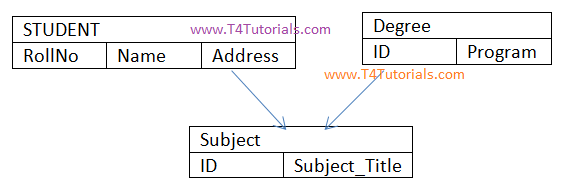
The following examples are provided to help illustrate how network data models are used in different use cases to showcase how a network data model can effectively capture and represent relationships in diverse domains, from social interactions to complex IT ecosystems.
In this tutorial, we will explore the database networkmodel. The network database model is a model for modeling the entities in such a way that one child entity can have more than one parent entity.
Peer-to-Peer and Client Server are examples of NetworkModels. The chief argument in favour of the networkmodel, in comparison to the hierarchical model, was that it allowed a more natural modeling of relationships between entities.
For example, in biochemistry, applications may need to model reaction pathway networks for living organisms; and in the pharmaceutical industry, applications that model the drug discovery process may need to model protein-protein interaction.
Three reference models have been successful in the networking community : 1) the Internet model, 2) the TCP/IP reference model and 3) the OSI reference model. We discuss these briefly in this section and will cover the OSI model layers in more detail in upcoming chapters.
Real-world Examples of NetworkModel The NetworkModel was widely used in the 1970s and 1980s, especially in applications that required high performance and navigational access, such as banking systems, airline reservation systems, and telecommunication systems.
In the late 1960s, several commercial database systems based on the networkmodel emerged. These systems were studied extensively by the Database Task Group (DBTG) within the CODASYL group.
The NetworkModel improved upon the Hierarchical Model by allowing many-to-many relationships and faster data retrieval. However, due to its complexity, it has been mostly replaced by the Relational Model (RDBMS), which is easier to manage and query using SQL.
Due to some limitations in hierarchical model, designers developed the Network Database Model. In this article, we will discuss the Network Database Model in detail with its operations, merits and demerits and various examples in detail.