As implied by its name, this interface models the mathematical set abstraction. The Setinterface places additional stipulations, beyond those inherited from the Collection interface, on the contracts of all constructors and on the contracts of the add, equals and hashCode methods.
In Java, the Setinterface is a part of the Java Collection Framework, located in the java.util package. It represents a collection of unique elements, meaning it does not allow duplicate values.
Unlike a List, a Set does not allow duplicates, and it does not preserve the order of elements (unless you're using TreeSet or LinkedHashSet). Common classes that implement Set: Tip: Use a Set when you need to store unique values only. Next, you'll explore the HashSet class in detail.
A Set is a Collection that cannot contain duplicate elements. It models the mathematical set abstraction. The Setinterface contains only methods inherited from Collection and adds the restriction that duplicate elements are prohibited.
This Java Set Tutorial Explains All about the Set Interface in Java. It covers how to Iterate through a Set, Set Methods, Implementation, Set to List etc.
This blog post will provide an in - depth look at the Set interface in Java, covering its fundamental concepts, usage methods, common practices, and best practices. The Set interface is part of the Java Collections Framework and is defined in the java.util package.
In this tutorial, we'll explore the Setinterface in depth, examine its various implementations, understand when to use each one, and learn best practices for working with Sets in Java. Before diving into the details, let's understand where the Setinterface fits in the Java Collections Framework hierarchy: ├── java.util.HashSet (class) │ ↑.
This blog explains the Java Set interface, its key methods, and its major implementations including HashSet, LinkedHashSet, TreeSet, and SortedSet. Learn how each type handles ordering, duplicates, and performance to choose the right one for your use case.
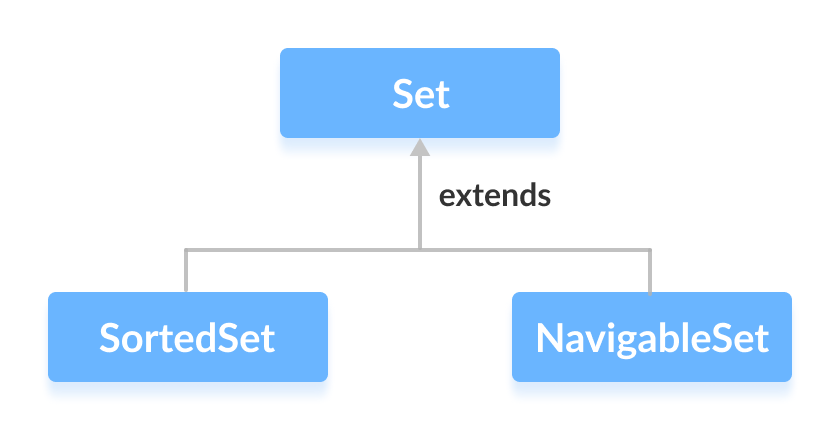 In this tutorial, we will learn about the Set interface in Java and its methods.